01
The context
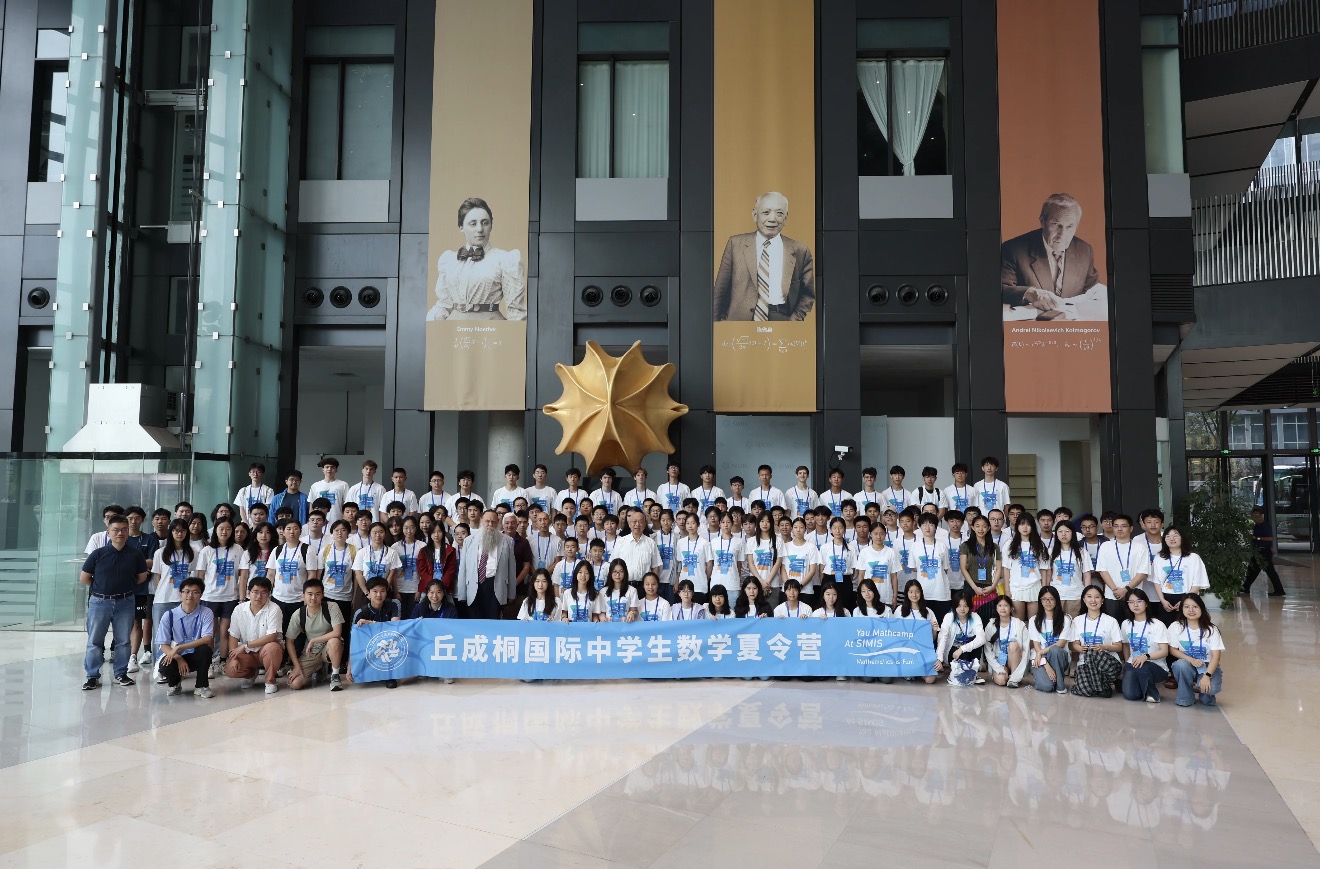
After a selective application process involving a personal statement, school reports, and teacher recommendations, I was surprised and delighted to be accepted into Yau Mathcamp. As a Grade 10 student, however, I soon found myself studying material taught at an advanced undergraduate level alongside highly accomplished students. Topics ranged from Ramsey’s and Sperner’s theorems to generating functions, graph colouring, eigenvalues, and algebraic topology. Gaps in my calculus knowledge and limited experience writing proofs made the transition especially demanding.
02
The process
At first, I tried to understand everything by rewatching each fast-paced lecture. This consumed the time I needed for homework, while the unfinished homework left me less prepared for assessments. As the pressure accumulated, my confidence and wellbeing declined, making it even harder to think clearly. I eventually changed my approach. Instead of repeatedly reviewing entire lessons, I prioritised solving problems, using the homework to identify exactly what I did not understand. I caught up on essential calculus, asked teachers targeted questions, discussed problems with other students, and gradually adapted to the pace. My progress remained uneven, but it became more sustainable and purposeful.
03
The takeaway
Near the end of the programme, I was genuinely uncertain whether I would pass. However, my assessment results improved significantly, and I ultimately earned a certificate of completion. The experience did not give me a simple, entirely positive lesson. The strong emphasis on speed and intelligence sometimes made me question whether I belonged in mathematics at all. Yet my continuing—and even growing—interest in the subject showed me that mathematical potential cannot be measured only by how quickly someone understands unfamiliar ideas. I now place greater value on curiosity, persistence, collaboration, and the willingness to change an ineffective method.
04
What comes next
I plan to bring what I learned back to my school’s mathematics club. By preparing presentations on selected topics, I hope to strengthen my own understanding while making advanced ideas more approachable for other students. I also intend to explore related concepts beyond the material covered at Mathcamp.